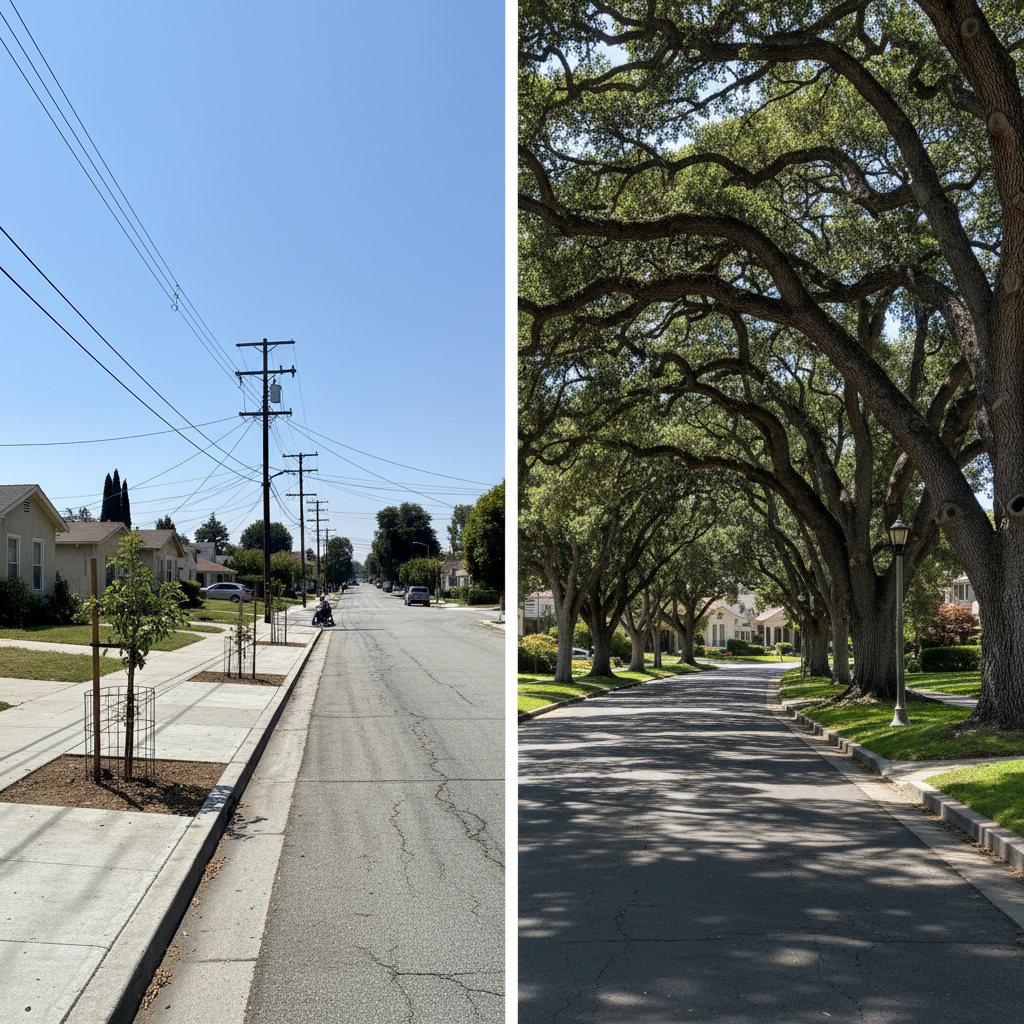
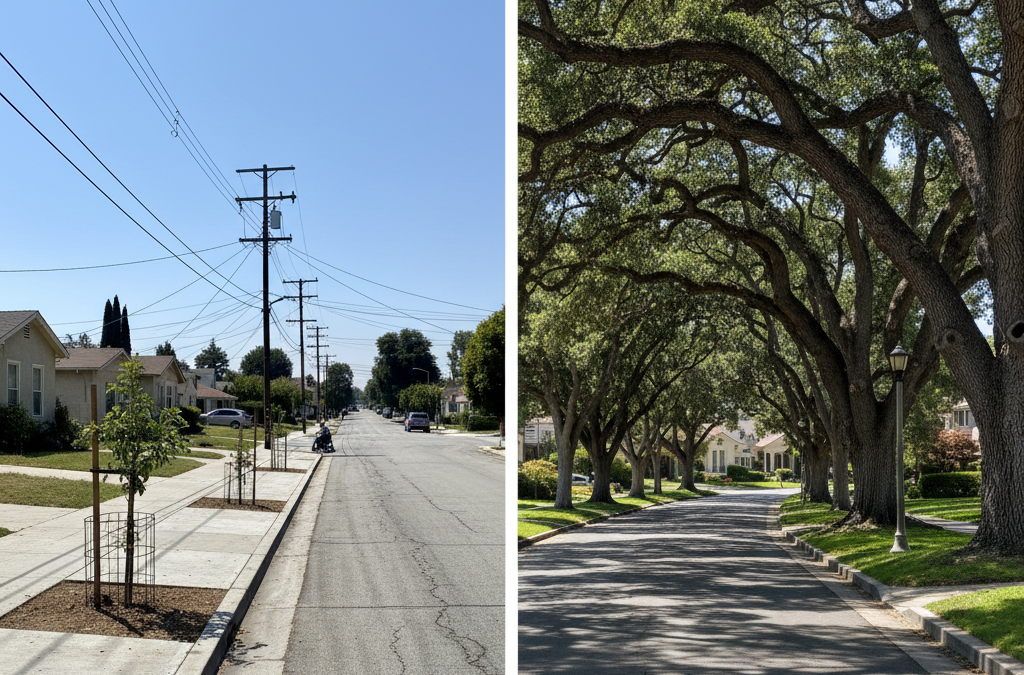
Los Angeles faces stark inequities in tree canopy and hardened surfaces that deepen heat, health and hydrologic risks for low-income, historically redlined neighborhoods: areas like South L.A. and parts of the northeast San Fernando Valley have canopy as low as 5–7% versus ~40% in affluent neighborhoods.
Learn more about this important issue from these sources:
Knock LA (“In Los Angeles, Shade Most Often Goes to the Privileged“)
This piece documents vast inequities in Los Angeles’s tree canopy—low-income, historically redlined neighborhoods (e.g., South L.A., Pacoima) can have as little as 5–7% canopy versus ~40% in affluent areas—linking those gaps to worse heat exposure, health outcomes, and long-term disinvestment. It highlights local planting efforts (such as grant-funded work in Boyle Heights), the city’s new chief forest officer and inventory, and argues that canopy expansion must be paired with sustained funding, maintenance, and meaningful community engagement to avoid tokenism and “green gentrification.”
Los Angeles Times (Contributor Devon Provo: “L.A. is ripping up 1,600 acres of pavement — but is it too little, too late?“)
This op‑ed explains the county’s new target to depave 1,600 acres by 2045—removing unnecessary concrete to create space for trees, rain gardens and soil—and situates depaving as restorative infrastructure that cools, filters water, and rebuilds lost ecosystems. It stresses that natural infrastructure requires long‑term care and budgetary commitment, warns that current targets may be insufficient given accelerating heat and past over‑paving, and calls for reframing public budgets to value nature’s ongoing services rather than viewing pavement as the cheaper default.